 VACUUM VERIFIED
What is a self-emptying dock (and is it worth it?)
5 min read · updated August 30, 2026 · Vacuum Verified
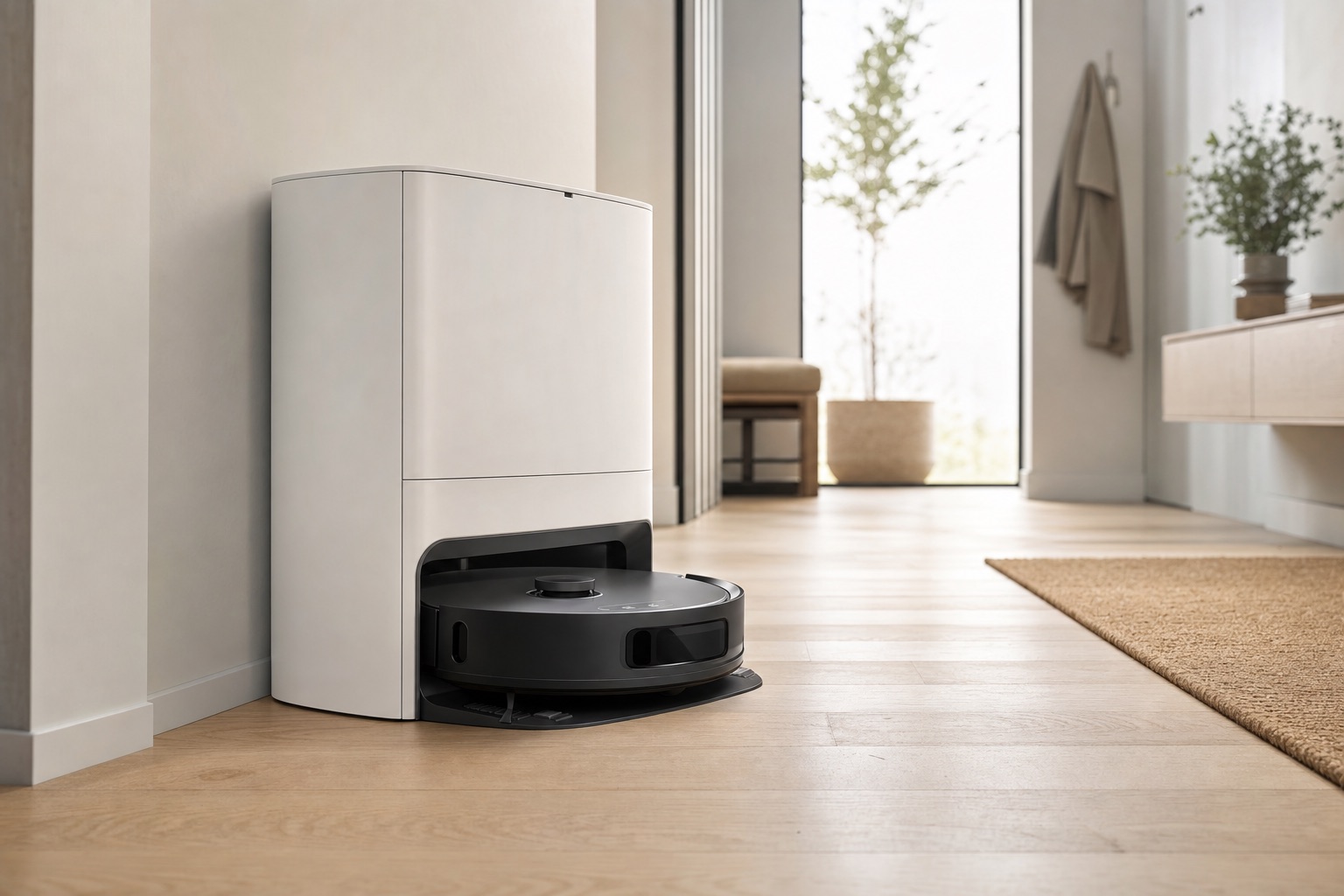
A robot vacuum's onboard bin is tiny — typically under half a liter — because the robot itself has to stay short enough to slide under furniture. A self-emptying dock solves that by vacuuming the robot's bin into a much larger container at the base station, turning a daily chore into a monthly one. Here's how the designs differ, what they cost to run, and when the upgrade actually pays off.
- A self-empty dock vacuums the robot's small bin into a large container at the base — days of debris in one sitting becomes weeks between touches.
- Bagged docks hold more and empty more hygienically; bags cost roughly $10-20 a year. Bagless stations cost nothing to run but you empty them over the trash.
- Real-world intervals run 4-8 weeks for typical homes; shedding pets roughly halve manufacturer claims.
- It's the single feature that most changes daily life with a robot — if you vacuum weekly or own a shedding pet, it's worth it.
How it works
When the robot docks after a run, the base spins up a high-powered vacuum that pulls debris out of the robot's bin and into the dock's container through a sealed port. The transfer takes under a minute and is loud — briefly louder than the robot itself cleaning. Nothing about the robot's own cleaning changes; the dock is purely about how often you touch the machine.
Bagged vs bagless stations
Bagged docks (Roborock, iRobot's Clean Base) pull debris into a disposable 2-3 liter bag. They hold more, seal allergens away, and you swap a bag every month or two — most owners will touch the vacuum once every six to seven weeks on a 2.5 L bag. Bags run roughly $10-20 a year.
Bagless stations (Eureka, Shark) collect debris in a canister you carry to the trash — no recurring cost, and generous intervals (Eureka's bagless station is designed around ~45 days between empties; Shark advertises up to 60). The trade-off is the emptying moment: like any bagless bin, dumping it releases a puff of fine dust, which allergy households may dislike.
- Choose bagged if: anyone has allergies, you want the longest intervals, you never want to see the debris.
- Choose bagless if: you hate recurring costs, you empty indoors anyway, you want fewer consumables to stock.
Real-world emptying intervals
Manufacturer intervals assume average debris. In practice: a no-pet, mostly-hard-floor home might stretch a large dock to two months; a shedding-pet, carpeted home cuts every claim roughly in half. Intervals also depend on run frequency — a robot running daily in a small apartment collects less per week than the same robot running three times a week in a large one.
Is it worth the money?
The dock is the feature that most changes daily life with a robot. If you vacuum more than once a week or own a shedding pet, yes — it converts a daily or every-other-day chore into a bimonthly one, which is why every machine in our self-emptying ranking is built around one. If you run a robot twice a week in a small apartment, a standard bin robot does the same cleaning for less money; spend the difference on better navigation instead.
One nuance: mop-focused docks (washing and drying pads) solve a different chore. If you want the mop without the smell, see our guide to mop combos — but if you won't use the mop, a vacuum-plus-bag-dock machine is genuinely less total work.
Frequently asked questions
Do self-empty docks work with thick carpet?
Yes — dock emptying is independent of floor type. What matters for carpet is the robot's suction and brush, which is why our picks pair docks with 8,000+ Pa machines.
How often do I change a dock bag?
For a typical home, 6-8 weeks on a 2.5 L bag; heavy shedding or large homes halve that. Bags cost roughly $10-20 a year either way.
Is the emptying loud?
The transfer cycle is briefly louder than the robot's cleaning — expect 30-60 seconds of strong whoosh when it docks. Many apps let you schedule it off-hours.
Machines this guide points to
Verified picks from our database mentioned in this guide — every price loads live from merchant listings.