 VACUUM VERIFIED
Bagged vs bagless: which should you buy?
6 min read · updated August 30, 2026 · Vacuum Verified
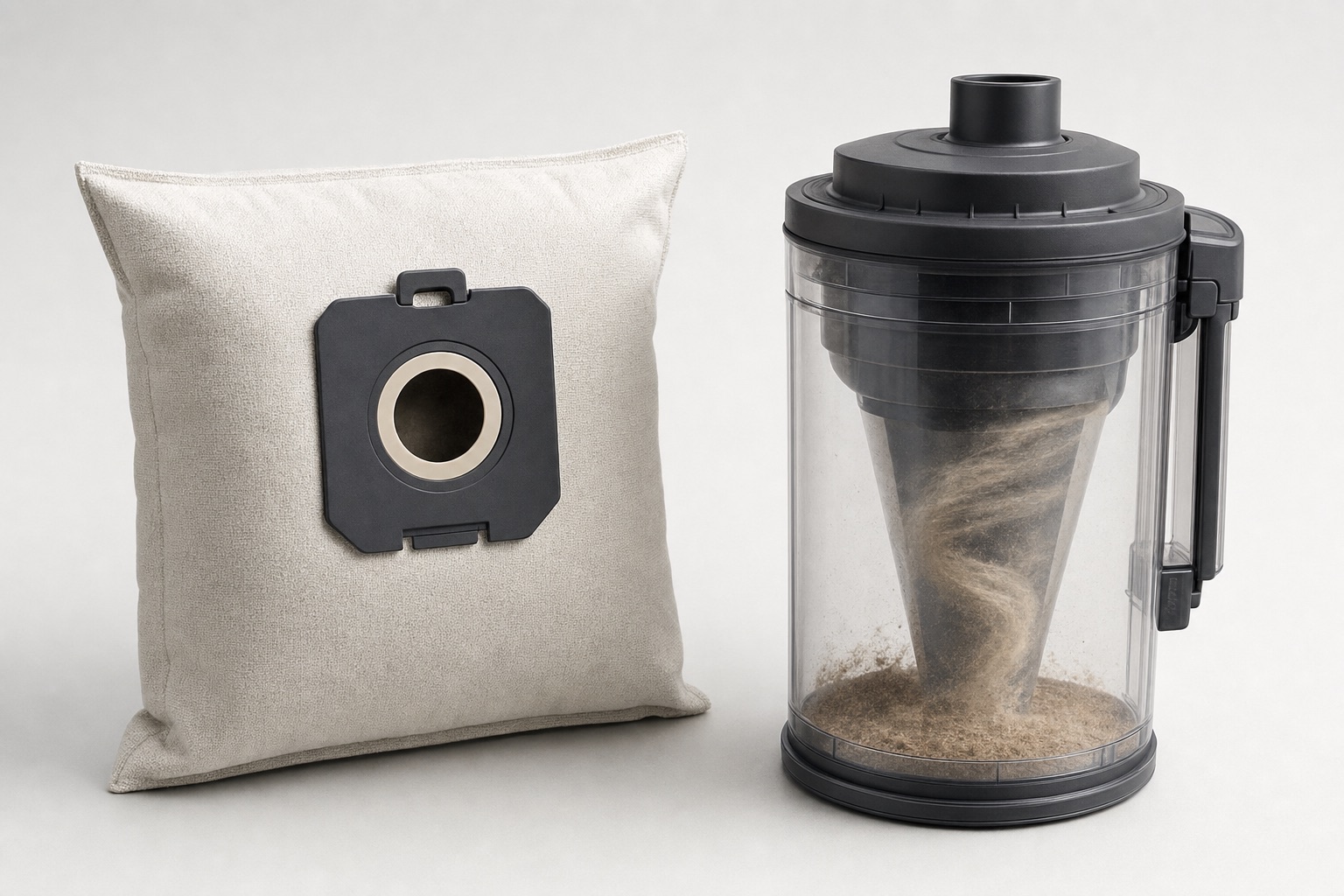
Bagged versus bagless is the oldest debate in vacuums, and it persists because both sides are right. Bagged machines are cleaner to own; bagless machines are cheaper to own. The right answer depends less on the machines than on your home: allergies, shed volume, and how much recurring cost annoys you. Here is the full trade-off, without the marketing.
- Bagged wins hygiene: you never touch the dust, and sealed bags empty without a particle plume — the allergy-household default.
- Bagless wins running cost: no bags to buy, ever; the price is a dust cloud at every emptying and more filter washing.
- Bagged machines hold more (3-4.5 L bags vs 0.5-2 L bins) and keep performance steadier as they fill.
- There is no objectively better type — you're choosing between spending money (bags) or thirty seconds of exposure (emptying).
The hygiene case for bags
In a bagged machine, the bag is the primary filter: debris goes in, stays in, and comes out sealed when the bag is full. You never see or touch the dust. For allergy households this matters most at emptying time — every bagless dump releases a plume of re-aerosolized fine particles, while a sealed bag (Miele's AirClean, SEBO's fleece bags, Eureka's allergen-lock bags) comes out of the machine and goes into the trash closed.
Bags also hold much more: a full-size canister or upright bag is 3-4.5 liters, versus 0.5-2 liters for most bagless bins, so bagged machines go longer between interventions in big homes.
The cost case for bagless
Bagless machines have no consumable container — the cyclone separates debris into a clear bin you empty and reuse. Over a machine's life that saves $100-200 in bags, and there's nothing to stock or run out of mid-clean. The visible dirt swirl is also genuinely satisfying, and rinsing a bin takes seconds.
The costs are paid differently: more frequent emptying (small bins fill fast), filter washing to keep cyclones performing, and the emptying plume itself. Bagless machines also transfer more of the filtration job to their filters — which is why washable-filter care is a bagless-owner skill (rinse, 24-hour dry, repeat monthly).
Performance as they fill
A bag's resistance rises as it fills, but the design keeps airflow usable across nearly the whole bag — bagged machines perform steadily until the bag is nearly full. Bagless cyclones lose separation efficiency as the bin loads, letting finer dust reach the filter sooner; performance drops more noticeably as the bin fills. In both cases the fix is the same — empty earlier than you think you need to — but bagless machines punish procrastination a little more.
Who should buy which
Buy bagged if anyone in the home has allergies or asthma (non-negotiable, sealed bagged systems), if you dislike touching dust, or if you want the longest intervals in a large home. Our allergy ranking is dominated by sealed bagged machines for exactly these reasons.
Buy bagless if running costs matter most, if you empty outdoors or don't mind the plume, or if you're stocking a rental, dorm or vacation home where consumables get forgotten. If you refuse bags but want allergy-grade filtration, sealed bagless machines exist — Miele's Blizzard CX1 and Dyson's whole-machine HEPA designs — at a premium over ordinary bagless.
And note the middle path: self-emptying robot docks re-create the bagged/bagless choice at the station — see our dock guide for that version of the same trade-off.
Frequently asked questions
Are bagged vacuums better for allergies?
Yes, on balance: sealed bags contain dust end-to-end and empty without releasing a plume. Sealed bagless designs close the gap at higher prices, but a sealed bagged machine is the dependable default.
How much do bags cost per year?
For typical use, $10-20 a year in bags for a household vacuum — more if you have shedding pets or a very large home. Generic bags exist for many models, at some risk to fit and sealing.
Do bagless vacuums lose suction?
All vacuums lose some performance as the container fills. Bagless cyclones start passing more fine dust to the filter as the bin loads, so rinse filters on schedule and empty by two-thirds to keep performance steady.
Can I reuse or wash vacuum bags?
No. Bags are designed to seal and be disposed; washing destroys the media and the seal. Attempting it defeats the hygiene reason you bought a bagged machine.
Machines this guide points to
Verified picks from our database mentioned in this guide — every price loads live from merchant listings.