 VACUUM VERIFIED
Vacuum suction explained: Pa, air watts and why big numbers lie
5 min read · updated August 30, 2026 · Vacuum Verified
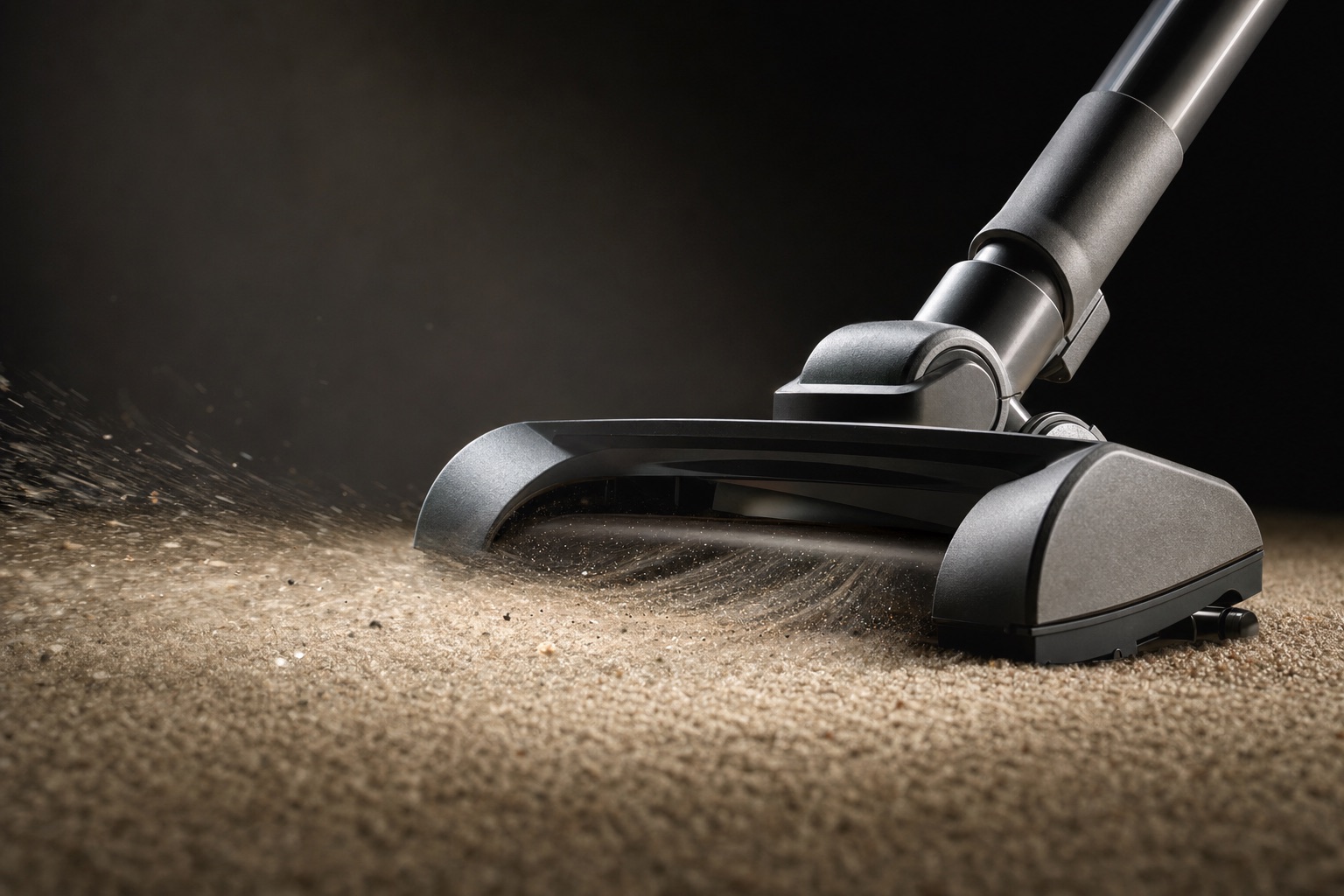
Suction is the most-quoted and least-understood number on a vacuum spec sheet. Two machines can both claim “strong suction” while cleaning completely differently, and a robot advertising 22,000 Pa won't out-clean a $90 corded upright on carpet. This guide explains what the units actually measure, where marketing numbers come from, and what predicts real cleaning performance better than any single figure.
- Pa (pascals) measures suction pressure; air watts combine pressure with airflow to estimate delivered cleaning power.
- Marketing numbers are measured at the motor in boost mode — not at the nozzle, not with a full bin, not on carpet.
- On carpet, brush agitation matters as much as suction; a weak brush with big Pa still leaves embedded hair behind.
- Ratios beat absolutes: compare machines within a category and price class, not against a flagship's headline number.
Pa, air watts, and what each one measures
Pascals (Pa) measure suction pressure — how hard the machine can pull against a blockage. It's the water-lift idea from wet/dry shop vacs: high pressure, small flow. Robots lean on Pa because it's an easy integer to advertise: budget robots land in the 2,000-4,000 Pa range, good mid-range machines around 8,000-10,000 Pa, and current flagships quote 15,000-22,000 Pa.
Air watts (AW) attempt something more honest: delivered cleaning power, combining suction pressure with actual airflow. A machine can have huge pressure and tiny airflow (a straw) or huge flow and no pressure (a fan); air watts penalize both. Cordless sticks span roughly 20-60 AW in eco mode and 150-250 AW in boost; corded machines sustain their number indefinitely because wall power has no runtime budget.
The catch: both numbers are measured at the motor, in laboratory conditions, usually in maximum boost mode with a clean filter. Neither describes what arrives at the nozzle.
Where the numbers fall apart in your home
Between the motor and your floor sit a bag or cyclone, filters that load with dust, hoses, wands and a floor head — every stage costs airflow, and a full bin costs more. Meanwhile, boost mode exists because batteries can't sustain it: a stick that quotes 250 AW might run 90 AW in the mode you actually use daily.
On carpet, pickup depends on the brush roll as much as suction. Agitation beats embedded hair and dust out of the pile so the airflow can carry it away — which is why a $90 bagged upright with a stiff bristle brush and a sustained corded motor can out-clean pricier machines on carpet. On hard floors, sealed suction matters more because debris sits exposed; the failure mode there is large particles flying away from the head, not suction shortfall.
What to look at instead
Treat suction numbers as a coarse filter, not a ranking. Within a category, more is generally better; across categories, they don't compare (robots trade raw power for autonomy and coverage). Then weight the things spec sheets underplay: brush design for your floor type, whether filtration is sealed, how the machine performs with a loaded bin, and sustained (not boost) output on cordless machines.
Our DustScore exists precisely because no single spec predicts cleaning: the cleaning sub-score weighs hard-floor debris, embedded-carpet fur, hair wrap and edge pickup from standardized runs rather than motor claims.
Frequently asked questions
How many Pa is good for a robot vacuum?
Treat 4,000 Pa as the floor for pet hair on hard floors, 8,000+ Pa as the comfortable mid-range for carpet attention, and don't pay flagship prices for Pa alone — navigation and brush design clean more floor than the last 5,000 Pa.
Is higher air watts always better?
More AW means more delivered power, but only the same technology and head type compare fairly. Boost-mode AW also drains batteries fast; check the sustained mode figure and runtime when it matters.
Why does my vacuum lose suction as I clean?
A loading bag, bin or filter strangles airflow long before the bin looks full. Empty bagless bins by two-thirds, and check filters if suction drops — it's the most common fixable cause.
Machines this guide points to
Verified picks from our database mentioned in this guide — every price loads live from merchant listings.