 VACUUM VERIFIED
Anti-tangle brushes explained (and why they matter more than suction)
5 min read · updated August 30, 2026 · Vacuum Verified
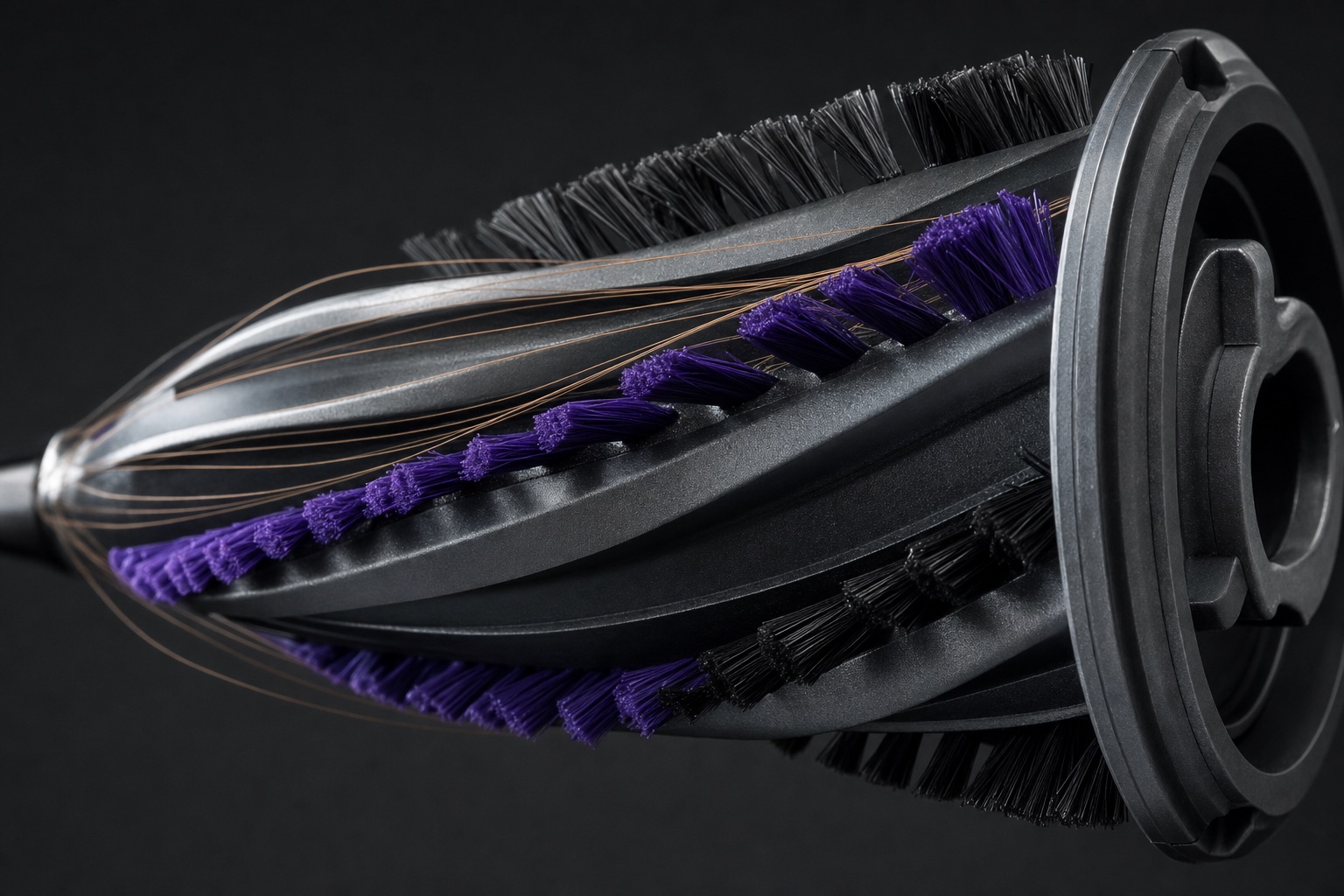
Ask robot vacuum owners what they hate most and the answer isn't noise or price — it's cutting hair out of the brush roll. Hair wraps around spinning brushes, binds at the bearings, and strangles performance until someone takes scissors to it. Anti-tangle brush design is the spec-sheet line that predicts whether you'll do that chore weekly or monthly, and it's worth more than most marketing budgets admit.
- Hair wrap is the maintenance chore owners hate most — scissors-and-patience sessions on a bristle brush, weekly in shedding homes.
- Anti-tangle designs fall into four families: bristle-free rubber fins, conical brushes that funnel hair to suction, hair-cutting blades, and detangling combs.
- Long-haired humans and shedding pets benefit more from a good anti-tangle brush than from higher suction numbers.
- No design eliminates maintenance entirely — engineering turns a weekly chore into a monthly glance.
Why hair wraps in the first place
Traditional brush rolls mix stiff bristles with a spinning core: bristles beat carpet and sweep hard floors, which cleans well — but long strands (human hair, pet fur, thread) catch in the bristle tufts and the spinning motion winds them tight toward the ends, where they bind the bearings. Short pet hair sheds off; hair longer than a few inches wraps. A household with one long-haired human generates enough to matter weekly.
The four anti-tangle designs
Bristle-free rubber fins replace bristles with flexible rubber vanes. Hair can't anchor to bristle tufts that no longer exist, so strands stay loose until the suction path takes them. This is the classic eufy and Shark approach and the cheapest reliable fix.
Conical ( tapered) brushes angle the brush roll so hair migrates along the cone toward the wide end — into the suction path — instead of winding at the bearings. Roborock's DuoRoller and Dreame's conical designs use this geometry; it's our favorite because it preserves bristle-style agitation while shedding hair.
Hair-cutting brushes add a blade element behind the brush roll that slices wound hair so suction can swallow the pieces (Eureka's FlexiRazor is the current example). It works — with the obvious caveat that it's actively cutting, so check the manufacturer's cord-safety guidance around loose threads and charging cables.
Detangling combs sit ahead of the brush and strip hair off before it winds (Dreame's comb systems). Like conical designs they preserve cleaning aggression; like all passive systems they need occasional manual clearing of the comb itself.
What it means for your home
If your household is long-haired humans, shedding pets, or both: prioritize brush design over suction numbers — this is the feature that decides whether the machine feels self-maintaining or needy. Our pet-hair ranking weights it accordingly, and the quiet champion there is Narwal's zero-tangling brush, which our reviewers note genuinely never wraps.
If your floors are mostly short-haired or hard-surface debris, any modern brush design is fine — put your money into navigation or a self-empty dock instead, which change daily life more.
Either way, one honest note: no anti-tangle design is maintenance-free. Hair still collects at the brush ends and side brush; the difference is that good engineering turns a weekly scissors session into a monthly glance — which is exactly how our maintenance sub-score treats it.
Frequently asked questions
Do anti-tangle brushes clean as well as bristle brushes?
On carpet, bristle-style agitation still cleans deepest, which is why conical and comb designs (that keep aggressive brushing) are our favorites. Pure rubber-fin designs trade a little carpet agitation for near-zero wrap.
Are hair-cutting brush rolls safe around cords?
Manufacturers design the cutter to engage on hair wound around the roll, and AI obstacle avoidance handles cables — but the honest practice is to keep charging cables and threads off the floor, with any robot.
How often should I still check the brush?
Monthly on good anti-tangle designs; weekly on traditional bristle rolls in shedding homes. It's a 30-second glance — look at the brush ends, where hair collects first.
Machines this guide points to
Verified picks from our database mentioned in this guide — every price loads live from merchant listings.